Dynamic Changes in Interictal Burden During 3-Year Follow-Up for Medication Overuse Headache
Article information

Abstract
Purpose
Treatment improves medication overuse headache (MOH), but interictal burden may persist. Limited longitudinal data leave uncertainty about whether residual burden reflects persistent impairment, recovery, or newly emerging burden. We investigated changes in interictal burden during the 3 years after MOH diagnosis.
Methods
This single-center substudy of a nationwide prospective MOH registry enrolled 149 patients at baseline and assessed interictal burden at the 2- and 3-year follow-ups using the 4-item Migraine Interictal Burden Scale (MIBS-4). The Wilcoxon signed-rank test and exact McNemar test were used to analyze paired changes.
Results
At 3 years, clinical follow-up was completed by 89 patients and the MIBS-4 by 61; 57 had paired assessments at 2 and 3 years. At this follow-up, 9 of 89 patients (10.1%) had medication overuse (MO). Among patients with paired MIBS-4 assessments, the median score decreased from 2.0 (0.0–4.0) at 2 years to 1.0 (0.0–3.0) at 3 years (p=0.006), and the proportion with substantial-to-severe interictal burden decreased from 47.4% to 29.8% (p=0.031). Recurrence by 3 years affected 8.3% of patients whose MO had resolved at 2 years. At 3 years, substantial-to-severe interictal burden persisted in 28.6% of patients whose MO had resolved.
Conclusion
Interictal burden improved between 2 and 3 years after MOH diagnosis, yet clinically relevant burden persisted in more than one-quarter of patients whose MO had resolved. These findings suggest that recovery from MO and recovery from interictal burden do not necessarily proceed in parallel, supporting the inclusion of interictal burden in long-term MOH assessment.
INTRODUCTION
Medication overuse headache (MOH) is a disabling secondary headache disorder that develops in individuals with a pre-existing primary headache, most commonly migraine, in association with regular overuse of acute headache medications.1,2 Treatment aimed at reducing medication overuse, together with appropriate preventive therapy, can substantially reduce headache frequency and acute medication use, and many patients no longer meet medication-overuse criteria during follow-up.3 Nevertheless, long-term outcomes remain heterogeneous, and relapse may occur even after successful initial treatment.4,5 These observations suggest that recovery from MOH is a longitudinal process that may not be fully captured by headache frequency or medication-use status alone.
Interictal burden represents an additional dimension of migraine-related disability that occurs outside headache attacks.6,7 It includes impairment in work or school and family or social activities, difficulty making plans or commitments, and emotional or cognitive distress related to future headaches.6,7 The Migraine Interictal Burden Scale (MIBS-4) was developed to quantify these effects during headache-free periods,8 and has since demonstrated associations with migraine-related disability and other patient-reported outcomes, including work productivity.9-11 Longitudinal studies have shown that MIBS-4 scores may improve during onabotulinumtoxinA treatment for chronic migraine.12,13 However, longer-term longitudinal data on interictal burden remain limited.
In our previous 2-year follow-up study of patients with MOH, headache frequency and medication overuse improved markedly, whereas nearly half of the patients continued to experience substantial-to-severe interictal burden.14 However, because the MIBS-4 was first assessed at the 2-year follow-up, that study provided only a cross-sectional snapshot of residual burden. It therefore remained unclear whether interictal burden observed at 2 years represented persistent impairment, continued recovery, or a dynamic state in which burden could subsequently improve or worsen. Addressing this question requires repeated assessment within the same individuals.
The present study extended follow-up of the same prospective MOH cohort to 3 years and incorporated repeated MIBS-4 assessments at the 2- and 3-year time points. We aimed to characterize longitudinal changes in interictal burden between 2 and 3 years after MOH diagnosis and to determine whether these changes paralleled medication-overuse trajectories.
MATERIALS AND METHODS
1. Ethical approval
The study was approved by the Institutional Review Board (IRB) of Hallym University Dongtan Sacred Heart Hospital (IRB No. 2020-02-004). Written informed consent was obtained from all participants before enrollment, and the study was conducted in accordance with the Declaration of Helsinki.
2. Study design and participants
This study was a single-center longitudinal sub-study of the Registry for Load and Management of MEdicAtion OveruSE Headache (RELEASE), a nationwide multicenter prospective observational registry investigating the clinical characteristics and outcomes of patients with MOH in the Republic of Korea.
At our center, 149 consecutive patients with MOH were enrolled between April 2020 and November 2022 and followed prospectively. Although the original registry protocol included 1-year follow-up, participants at our center underwent extended follow-up for up to 3 years. All participants met the diagnostic criteria for MOH according to the International Classification of Headache Disorders, 3rd edition.1 Eligible participants were aged ≥19 years, were able to communicate and complete study questionnaires, and provided written informed consent. Patients with severe neurological, psychiatric, or systemic medical conditions that could interfere with participation or data validity were excluded.
Of the 149 participants enrolled at baseline, 124 completed the 1-year follow-up and 117 completed the 2-year follow-up, all of whom completed the MIBS-4 at that visit. At 3 years, 89 patients completed clinical follow-up: 85 continued from among the 117 2-year completers (28 with clinical follow-up only and 57 with paired 2- and 3-year MIBS-4 data), and four additional patients who had missed the 2-year visit entirely re-entered follow-up at 3 years, completing clinical assessment and the MIBS-4 for the first time. Sixty-one patients therefore completed the MIBS-4 at 3 years (57 paired plus these four new completers) (Figure 1).
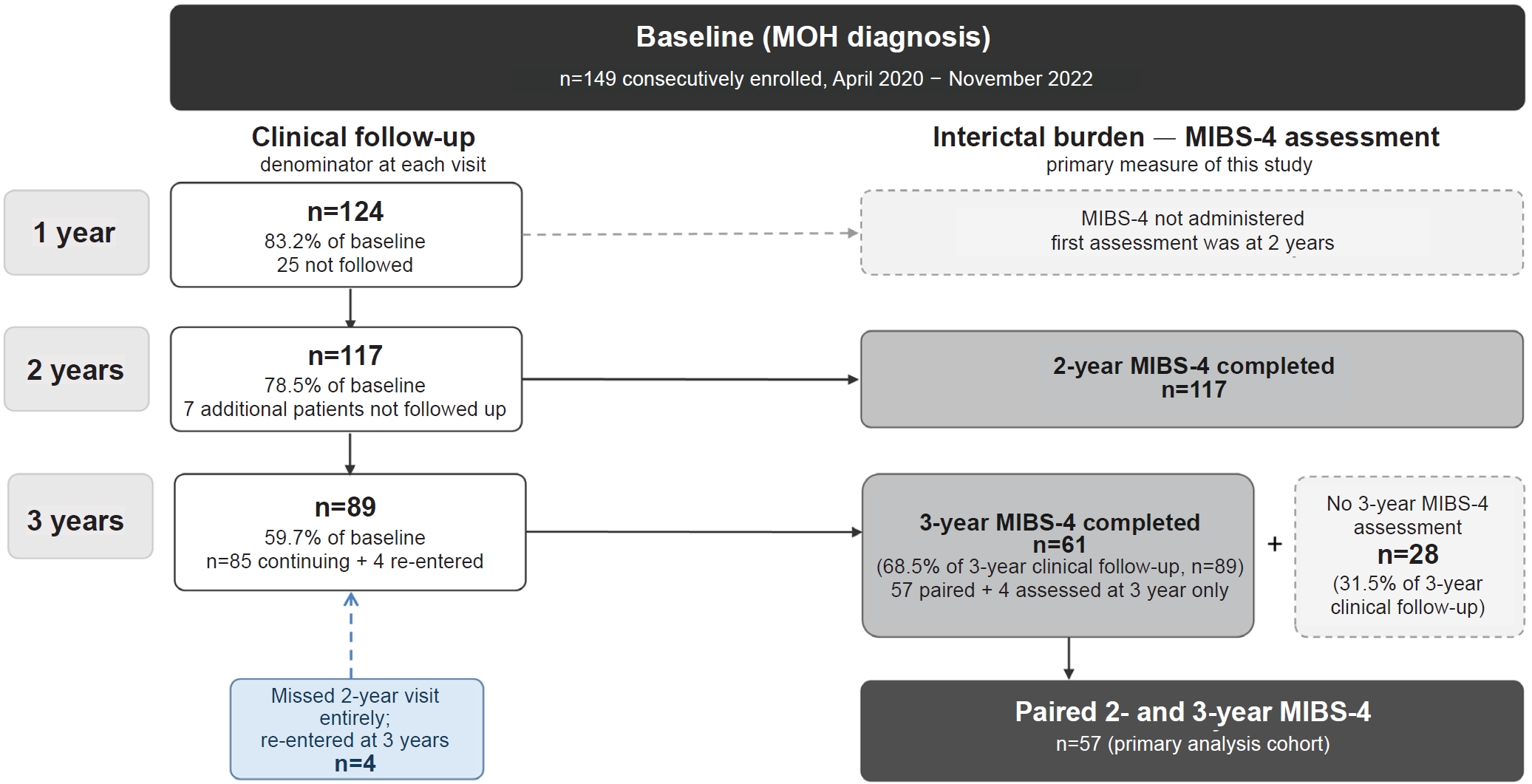
Study flow and MIBS-4 assessment cohorts. Of the 149 patients enrolled at baseline, 124, 117, and 89 completed clinical follow-up at 1, 2, and 3 years, respectively. The MIBS-4 was first administered at 2 years and completed by all 117 patients attending that visit. Among the 89 patients with 3-year clinical follow-up, 85 had also attended the 2-year visit, whereas four returned after missing the 2-year visit. At 3 years, 61 patients completed the MIBS-4, including 57 with paired 2- and 3-year assessments (the primary analysis cohort) and four assessed at 3 years only. The remaining 28 patients completed clinical follow-up without a 3-year MIBS-4 assessment.
MOH, medication overuse headache; MIBS-4, 4-item Migraine Interictal Burden Scale.
3. Clinical assessments
At baseline, demographic and clinical characteristics were collected using structured questionnaires. Headache-related variables included monthly headache days, monthly severe headache days, and monthly days of acute medication use. Acute medications were categorized as simple analgesics, combination analgesics, triptans, ergotamine, or opioids, and use of preventive medications was recorded.
Headache impact was evaluated using the Headache Impact Test-6 (HIT-6),15 and headache-related disability was assessed using the Migraine Disability Assessment (MIDAS).16 Depressive and anxiety symptoms were evaluated using the Patient Health Questionnaire-9 (PHQ-9)17 and Generalized Anxiety Disorder-7 (GAD-7),18 respectively.
Clinical follow-up was performed at 1, 2, and 3 years. Monthly headache days, monthly severe headache days, monthly days of acute medication use, and medication-overuse status were reassessed at each visit. Medication overuse was defined according to the medication-specific thresholds of the International Classification of Headache Disorders, 3rd edition: use of triptans, ergotamines, opioids, or combination analgesics on ≥10 days/month, or simple analgesics on ≥15 days/month.1 Medication-overuse status during follow-up was determined according to these medication-use thresholds alone and did not represent MOH remission, which additionally requires consideration of headache frequency. Preventive treatment use was also recorded at follow-up.
4. Assessment of interictal burden
Interictal burden was assessed using the MIBS-4 at the 2- and 3-year follow-ups.
The MIBS-4 is a four-item self-administered questionnaire with a 4-week recall period that assesses migraine-related burden during headache-free periods, including difficulties at work or school, challenges in family and social life, difficulty making plans or appointments, and emotional or cognitive distress.6,8,10 Each item contributes to a total score ranging from 0 to 12, with higher scores indicating greater interictal burden.8,10
Consistent with our previous 2-year report,14 MIBS-4 scores were categorized as none (0), mild (1–2), substantial (3–4), or severe (≥5). Substantial-to-severe interictal burden was defined as a MIBS-4 score ≥3, and severe interictal burden as a score ≥5.8 Longitudinal changes in the prevalence of substantial-to-severe and severe interictal burden were assessed between the 2- and 3-year follow-ups. For longitudinal analyses, changes in MIBS-4 grade between 2 and 3 years were categorized as improvement, no change, or worsening. Persistent severe burden was defined as severe burden at both assessments; resolved severe burden as severe burden at 2 years followed by non-severe burden at 3 years; and incident severe burden as non-severe burden at 2 years followed by severe burden at 3 years.
5. Study outcomes
The primary outcome was the longitudinal change in MIBS-4 total score between the 2- and 3-year follow-ups. Secondary outcomes included changes in the prevalence of substantial-to-severe interictal burden (MIBS-4≥3) and severe interictal burden (MIBS-4≥5), transitions in MIBS-4 severity grades, changes in individual MIBS-4 items, and medication-overuse status during follow-up. We also explored the relationship between medication-overuse resolution and residual interictal burden at 3 years.
6. Statistical analysis
Continuous variables were assessed for normality using the Shapiro–Wilk test and were presented as median (interquartile range). Categorical variables were presented as numbers and percentages. Paired continuous variables between the 2- and 3-year assessments were compared using the Wilcoxon signed-rank test. Changes in paired binary variables, including substantial-to-severe interictal burden (MIBS-4≥3) and severe interictal burden (MIBS-4≥5), were assessed using the exact McNemar test. MIBS-4 grade transitions were summarized using transition frequencies and visualized using a Sankey diagram. Attrition between the 2- and 3-year MIBS-4 assessments was explored by comparing patients with and without paired 3-year assessments using the Mann-Whitney U-test for continuous variables and Fisher’s exact test for categorical variables. Given the small number of patients with ongoing medication overuse at 3 years, comparisons of interictal burden according to medication-overuse status were considered descriptive, and no formal inferential testing was performed. A two-sided p-value <0.05 was considered statistically significant. Statistical analyses were performed using R version 4.5.2 (R Foundation for Statistical Computing). This observational study was reported in accordance with the Strengthening the Reporting of Observational Studies in Epidemiology (STROBE) guidelines.19
RESULTS
1. Study population
Among 149 patients enrolled at baseline, 124 (83.2%) completed the 1-year follow-up and 117 (78.5%) completed the 2-year follow-up. At 3 years, 89 patients (59.7% of the baseline cohort) completed clinical follow-up and 61 completed the MIBS-4. Fifty-seven patients had paired MIBS-4 assessments at both 2 and 3 years (Figure 1).
Among the 117 patients with 2-year data, no statistically significant differences were observed between patients with and without paired 3-year MIBS-4 assessments in 2-year monthly headache days, monthly medication days, MIBS-4 total score, prevalence of severe interictal burden, or baseline medication days, HIT-6, PHQ-9, and GAD-7 scores (all p≥0.456).
2. Clinical outcomes over 3 years
Reductions in headache frequency and acute medication use observed during earlier follow-up were also evident among patients assessed at 3 years (Table 1). Median monthly headache days decreased from 20.0 (17.0–29.0) at baseline to 7.0 (4.0–10.0) at 1 year, 6.0 (3.0–9.0) at 2 years, and 5.0 (2.0–7.0) at 3 years. Monthly medication days similarly decreased from 16.0 (13.0–23.0) at baseline to 3.0 (0.0–6.0) at 3 years. Medication overuse was present in all patients at baseline and decreased to 24.2% at 1 year, 17.1% at 2 years, and 10.1% at 3 years. Among the 61 patients who completed the 3-year MIBS-4, 30 (49.2%) had no interictal burden, 12 (19.7%) had mild burden, 11 (18.0%) had substantial burden, and 8 (13.1%) had severe burden. Thus, 19 patients (31.1%) had substantial-to-severe interictal burden at 3 years.
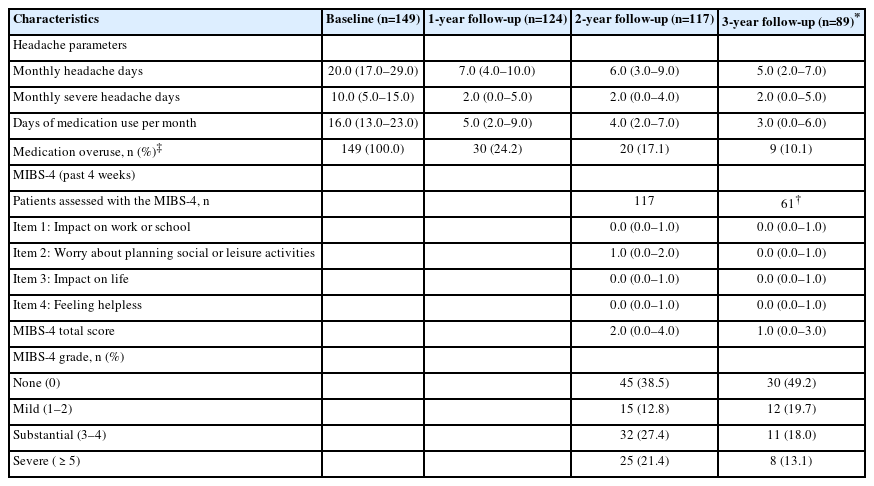
Clinical outcomes at follow-up assessments after diagnosis of medication overuse headache
3. Longitudinal changes in interictal burden
Among the 57 patients with paired MIBS-4 assessments, median MIBS-4 total score decreased significantly from 2.0 (0.0–4.0) at 2 years to 1.0 (0.0–3.0) at 3 years (p=0.006) (Table 2). The median within-patient change was –1.0 (–3.0 to 0.0). Among individual MIBS-4 items, worry related to planning social or leisure activities decreased from 1.0 (0.0–2.0) to 0.0 (0.0–1.0) (p=0.012), whereas changes in the other three items were not statistically significant. The proportion with substantial-to-severe interictal burden (MIBS-4≥3) decreased significantly from 27 of 57 patients (47.4%) at 2 years to 17 of 57 (29.8%) at 3 years (exact McNemar p=0.031). Severe interictal burden (MIBS-4≥5) decreased numerically from 12 (21.1%) to 8 (14.0%), but the paired change was not statistically significant (exact McNemar p=0.289).
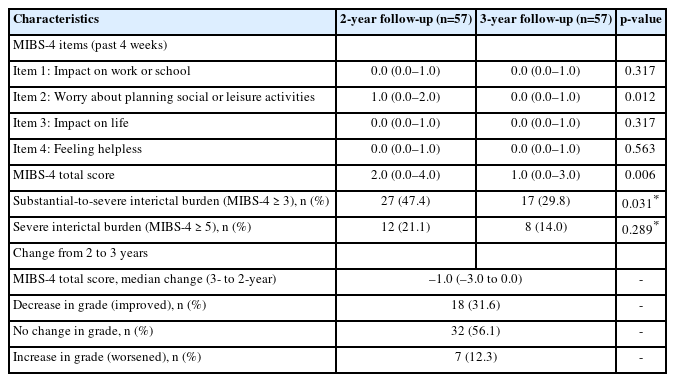
Longitudinal changes in interictal burden from the 2-year to the 3-year follow-up in patients with paired MIBS-4 assessments (n=57)
Regarding preventive treatment during the same follow-up period, calcitonin gene-related peptide monoclonal antibody use increased from 9 (15.8%) at 2 years to 10 (17.5%) at 3 years (7 continuing, 3 newly started, 2 discontinued), and onabotulinumtoxinA use increased from 3 (5.3%) to 7 (12.3%) (2 continuing, 5 newly started, 1 discontinued). Among the eight patients who newly started a preventive treatment between the 2- and 3-year assessments, median MIBS-4 change was –2, compared with 0 among the remaining 49 patients (Mann-Whitney U-test, p=0.216).
4. Individual transitions in interictal burden
Despite the overall decrease in MIBS-4 scores, individual trajectories were heterogeneous (Figure 2). Between the 2- and 3-year assessments, 18 patients (31.6%) moved to a lower MIBS-4 grade, 32 (56.1%) remained in the same grade, and 7 (12.3%) moved to a higher grade. Among 23 patients with no burden at 2 years, 21 remained in the same category and two worsened. Among seven with mild burden, two improved to no burden, two remained mild, and three progressed to substantial burden. Among 15 with substantial burden, 10 improved to none or mild, three remained substantial, and two progressed to severe burden. Of the 12 patients with severe interictal burden at 2 years, six (50.0%) remained severely affected at 3 years, whereas six improved to lower burden categories. Conversely, two patients who were non-severe at 2 years newly developed severe burden at 3 years. Despite the absence of a significant net change in severe-burden prevalence, both resolution and incident severe burden were observed.
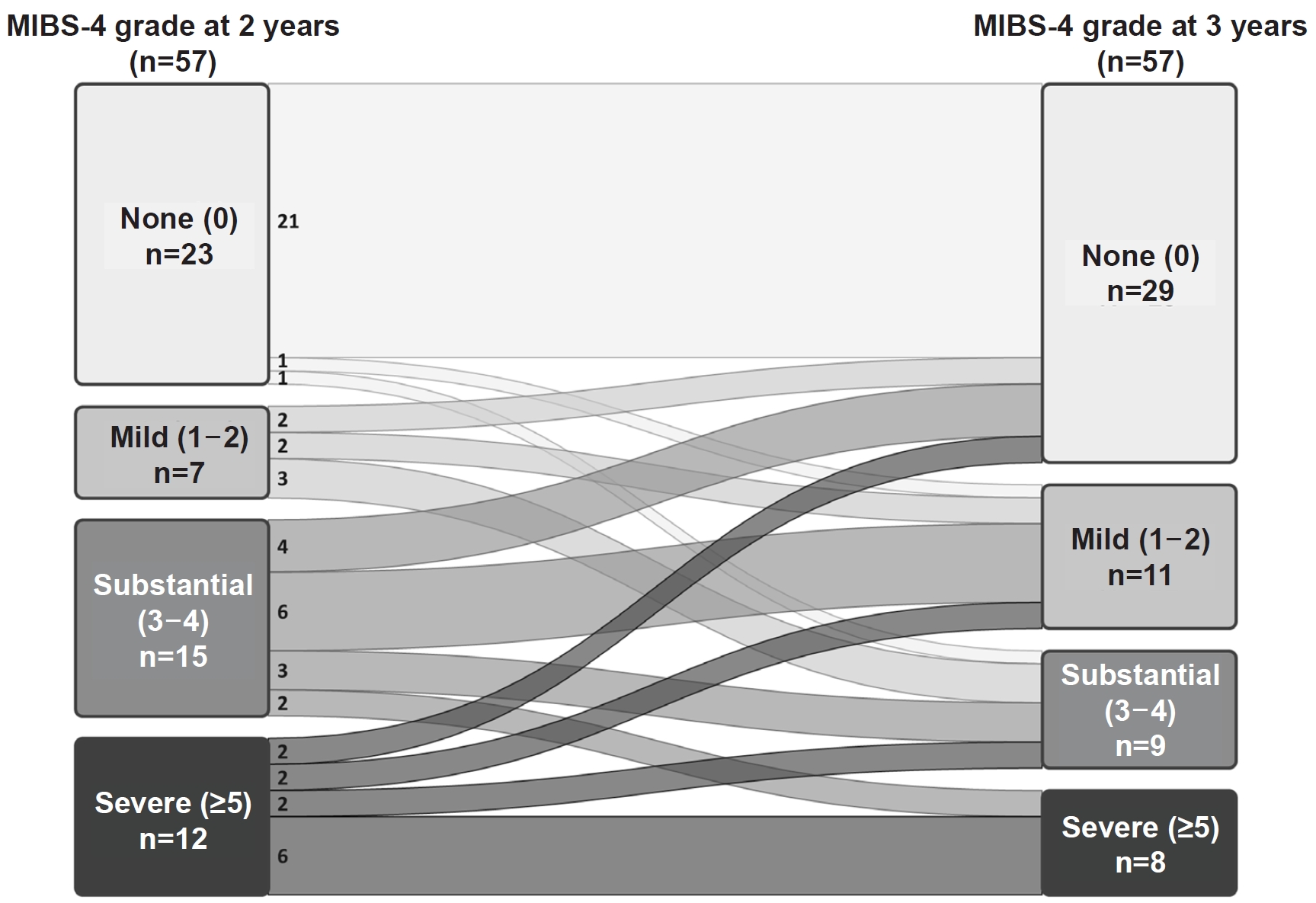
Transitions in MIBS-4 burden grade between the 2- and 3-year follow-ups. The Sankey diagram depicts changes in burden grade for individual patients among the 57 with paired MIBS-4 assessments. Burden was classified as none (0), mild (1–2), substantial (3–4), or severe (≥5). A lower burden grade was observed in 18 patients (improvement), an unchanged grade in 32, and a higher grade in 7 (worsening).
MIBS-4, 4-item Migraine Interictal Burden Scale.
5. Medication-overuse trajectories
Medication-overuse status also changed during the third year (Figure 3). Of the 89 patients with 3-year clinical follow-up, 85 had complete medication-overuse status at both 2 and 3 years and were included in this analysis; the remaining four had missing 2-year medication-overuse data. Among these 85 patients, 72 no longer met medication-overuse criteria at 2 years, whereas 13 continued to meet the criteria. Of the 72 patients with resolved overuse, 66 maintained resolution at 3 years, whereas six again met criteria for medication overuse, corresponding to a recurrence rate of 8.3%. Of the 13 patients with ongoing overuse at 2 years, 10 achieved late resolution and three continued to have medication overuse at 3 years. Overall, the four medication-overuse trajectories comprised sustained resolution in 66 patients (77.6% of the paired cohort), late resolution in 10 (11.8%), recurrence in six (7.1%), and persistent medication overuse in three (3.5%).
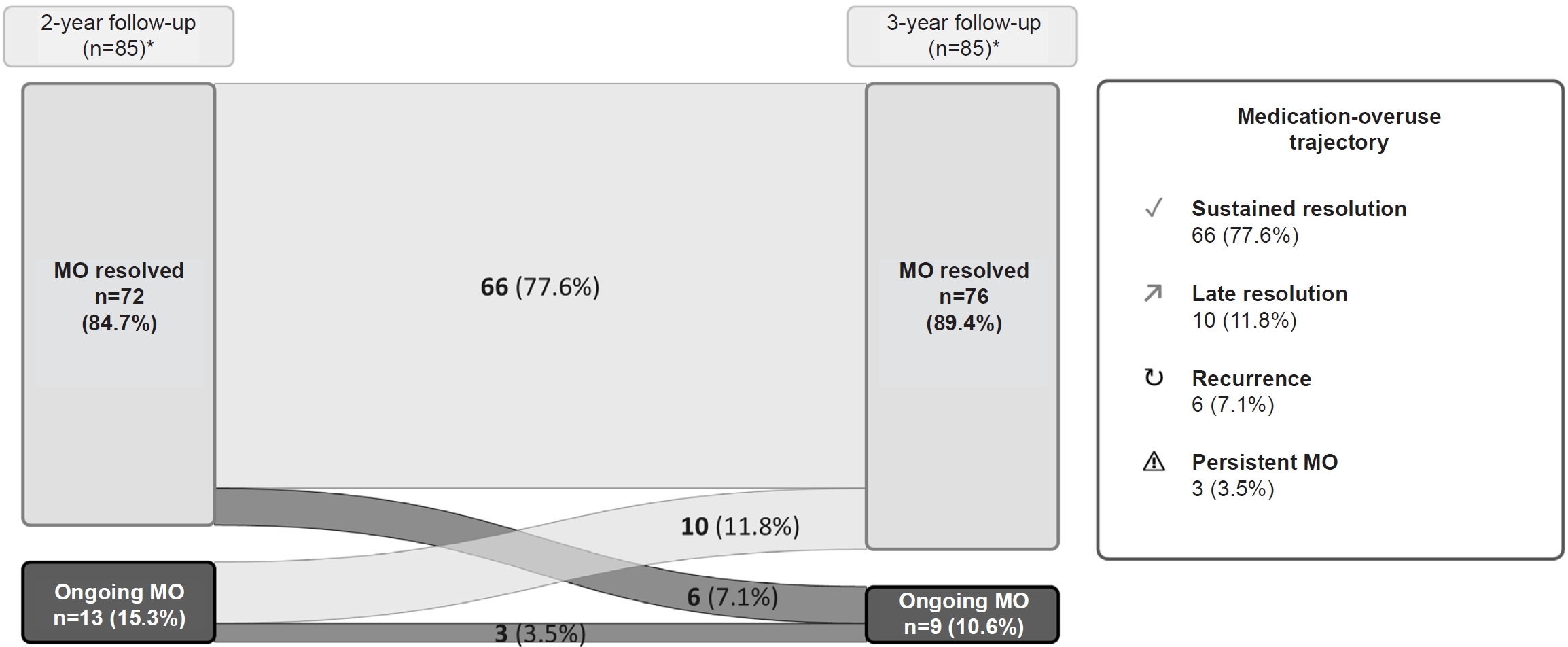
Medication-overuse trajectories between the 2- and 3-year follow-ups. For the 85 patients with medication-overuse status recorded at both 2 and 3 years*, trajectories comprised sustained resolution in 66 (77.6%), late resolution in 10 (11.8%), recurrence in 6 (7.1%), and persistent medication overuse in 3 (3.5%). Ribbon width and node height are proportional to patient counts. Medication overuse was defined as use on ≥10 days/month for triptans, ergotamines, opioids, or combination analgesics, or on ≥15 days/month for simple analgesics. Percentages were calculated using the full paired cohort (n=85) as the denominator.
MO, medication overuse.
*Four patients who returned for clinical follow-up at 3 years had missed the 2-year visit and therefore lacked 2-year medication-overuse status. They were excluded from the paired analysis (n=85 of 89).
6. Interictal burden according to medication-overuse status
Among the 61 patients who completed the MIBS-4 at 3 years, 56 no longer met medication-overuse criteria and five continued to meet the criteria. Severe interictal burden was present in two of five patients (40.0%) with ongoing medication overuse and six of 56 patients (10.7%) with resolved overuse. Importantly, among the 56 patients with resolved medication overuse, 16 (28.6%) continued to experience substantial-to-severe interictal burden. Because only five patients had ongoing medication overuse, these findings were considered descriptive. However, clinically relevant interictal burden persisted in some patients despite resolution of medication overuse.
DISCUSSION
In this 3-year longitudinal study of patients with MOH, interictal burden improved overall between the second and third years after diagnosis, but individual trajectories remained heterogeneous. MIBS-4 total scores and the proportion of patients with substantial-to-severe interictal burden decreased significantly, while improvement, persistence, and worsening were all observed within the same cohort. Importantly, substantial-to-severe interictal burden persisted in 28.6% of patients despite resolution of medication overuse, suggesting that recovery from medication overuse and recovery from interictal burden do not necessarily occur in parallel. These findings indicate that interictal burden remains dynamic beyond 2 years after MOH diagnosis. Because a substantial proportion of patients with MOH had already achieved resolution of medication overuse by the time MIBS-4 assessments began at 2 years, the present findings should be interpreted as characterizing patients with a history of MOH who remained under follow-up between 2 and 3 years, rather than the original baseline MOH cohort as a whole.
Interictal burden is increasingly recognized as a clinically relevant dimension of migraine that is not fully captured by conventional measures focused on headache attacks.6,7,11
Recent large-scale data further support ictal and interictal burden as related but distinct dimensions of migraine, with higher interictal burden associated with impairment across multiple aspects of daily life.20 Studies using the MIBS-4 have demonstrated associations with disability, quality of life, psychological symptoms, and work productivity, 9,11,21 supporting its role as a complementary measure of migraine-related burden. Our previous 2-year study showed that clinically relevant interictal burden remained common despite marked improvements in headache frequency and medication use.14 Longitudinal studies in chronic migraine have demonstrated improvements in MIBS-4 scores during repeated onabotulinumtoxinA treatment.12,13 The present study extends these observations to longer-term follow-up after MOH diagnosis. Notably, the absence of a significant net reduction in severe-burden prevalence masked substantial within-patient transitions, supporting the value of repeated assessment over cross-sectional evaluation alone.
Among patients whose medication overuse had resolved at 2 years, 8.3% again met overuse criteria at 3 years. Previous studies have shown that relapse after MOH withdrawal occurs predominantly during the first year after treatment, with a 1-year study reporting a relapse rate of 22%.5,22 However, our estimate represents recurrence specifically between years 2 and 3 among patients who had already achieved resolution by 2 years and therefore should not be interpreted as a cumulative relapse rate from initial treatment.
Previous studies have shown that MOH treatment can be accompanied by improvements not only in headache frequency and medication use but also in disability and psychological symptoms.23 In our cohort, however, resolution of medication overuse did not necessarily coincide with resolution of interictal burden. Among patients with resolved medication overuse at 3 years, 28.6% continued to have substantial-to-severe burden and 10.7% had severe burden. Although the small number of patients with ongoing medication overuse precluded formal comparisons, these findings suggest that medication-overuse status and interictal burden capture different aspects of long-term recovery. Resolution of medication overuse alone may therefore not fully capture broader recovery from headache-related burden. Among individual MIBS-4 items, improvement was observed primarily in worry related to planning social or leisure activities, whereas the other components did not change significantly. Given the exploratory nature of the item-level analyses, this finding should be interpreted cautiously.
Several limitations should be acknowledged. First, this was a single-center extension of a multicenter registry, which may limit generalizability. Second, attrition increased with longer follow-up, with only 57 of 149 baseline participants contributing paired MIBS-4 assessments. This raises the possibility of selection or survivorship bias operating in either direction: patients who achieved substantial symptomatic improvement may have discontinued regular hospital visits, while patients with persistent or worsening symptoms may also have dropped out of follow-up due to disengagement from care or treatment elsewhere. Although no statistically significant differences in measured 2-year clinical characteristics were observed between patients with and without paired 3-year MIBS-4 data, this comparison cannot exclude selection related to unmeasured factors, and the direction or magnitude of any such bias cannot be determined from the available data. Third, because the MIBS-4 was first administered at 2 years and uses a 4-week recall period, our findings reflect interictal burden around the 2- and 3-year assessments rather than its continuous trajectory from initial treatment. Fourth, treatment changes between the 2- and 3-year assessments—including initiation of CGRP monoclonal antibodies or onabotulinumtoxinA—may have contributed to the observed changes in interictal burden. Because these treatments were not randomly assigned and the number of patients initiating each treatment was small, their independent contribution cannot be distinguished from the natural course of MOH recovery. Depressive and anxiety symptoms were also not reassessed at 3 years, limiting assessment of their contribution to longitudinal changes in interictal burden. Fifth, because a minimal clinically important difference has not been established for the MIBS-4, individual score or grade transitions should be interpreted cautiously. Finally, the small numbers of patients with ongoing medication overuse and those with persistent or incident severe burden limited between-group comparisons and analyses of predictors.
Despite these limitations, this study provides repeated prospective assessment of interictal burden during long-term follow-up of MOH and demonstrates that trajectories of medication overuse and interictal burden do not necessarily coincide. These findings support incorporating interictal burden alongside conventional measures of headache frequency and acute medication use.
CONCLUSION
Interictal burden improved overall between 2 and 3 years after MOH diagnosis, but individual trajectories varied substantially. Severe burden persisted in some patients and newly emerged in others, while substantial-to-severe interictal burden remained in more than one-quarter of patients despite resolution of medication overuse. These findings support incorporating interictal burden into the long-term assessment of patients with MOH.
Notes
AVAILABILITY OF DATA AND MATERIAL
Data used or analyzed in this study are available from the corresponding author upon reasonable request.
AUTHOR CONTRIBUTIONS
Conceptualization: SJC; Data curation: YH, SJC; Formal analysis: YH, MKK, SJC; Investigation: YH, MKK, SJC; Methodology: YH, SJC; Resources: YH, SJC; Supervision: SJC; Writing–original draft: YH, SJC; Writing–review & editing: YH, MKK, SJC.
CONFLICT OF INTEREST
Soo-Jin Cho, Editor-in-Chief of Headache and Pain Research, and Mi-Kyoung Kang, Editor of Headache and Pain Research, were not involved in the review process of this article. All authors have no other conflicts of interest to declare.
FUNDING STATEMENT
The Headache Research Committee of the Korean Headache Society supported this study through a 2024 research grant for the Headache Research Group.
ACKNOWLEDGMENTS
The authors thank clinical research coordinators Jeung-Eun Kwon and Eun-Ju Kim for their assistance with this study and Jinseob Kim (Zarathu Co., Ltd.) for the statistical analysis.