
| Volume 27(1); February 2026
Full PDF
|
http://e-hpr.org |
Dear Colleagues,
We are pleased to present the second issue of the year, featuring four review articles (multimodal neuroimaging in RCVS, arterial dissection, and CVT; medication overuse and underuse in headache medicine; migraine in pilots; and trigeminal neuralgia), a guideline for cluster headache, and four original papers, including two articles on pediatric headache and dizziness.
Please find below the link to the table of contents and summaries of the esteemed articles.
Please enjoy, share and cite them.
Thank you for your support and assistance.
Office of Headache and Pain Research
Soo-Jin Cho, Editor-in-Chief; Soo-Kyoung Kim, Deputy Editor
| Editorials | ||
|
Primary or Secondary Headache Disorders in Moyamoya Disease and Cerebral Infarction: Clinical Challenges and the Potential Role of Non-Vasoconstrictive Migraine Therapies |
||
| Soo-Jin Cho | ||
| DOI: http://doi.org/10.62087/hpr.2026.0002 | ||
|
Pediatric Headache in Korea: Beyond a Common Complaint to a Chronic Neurological Condition |
||
| Yun Jin Lee | ||
| DOI: http://doi.org/10.62087/hpr.2026.0006 | ||
| Review Articles | ||
|
Headache and Stroke: A Review |
||
| Jong S. Kim | ||
| DOI: http://doi.org/10.62087/hpr.2025.0028 | ||
|
||
|
Brain Glymphatic and Lymphatic Systems in Migraine: Mechanistic Insights and Neuromodulation Perspectives with an Emphasis on Ultrasound-Based Approaches |
||
| Jaeho Kim | ||
| DOI: http://doi.org/10.62087/hpr.2026.0003 | ||
|
||
|
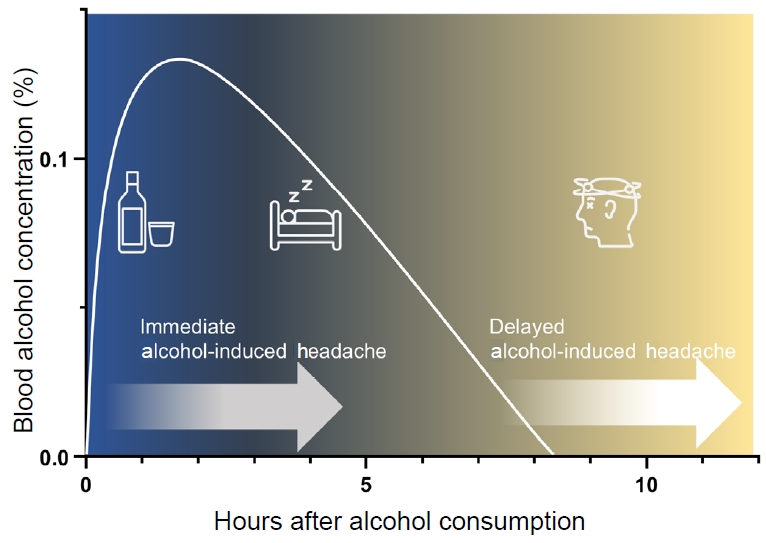
Alcohol-Induced Headache: A Narrative Review Based on Migraine Pathophysiology |
||
| Woo-Seok Ha | ||
| DOI: http://doi.org/10.62087/hpr.2025.0027 | ||
|
||
| Original Articles | ||
|
Natural Diagnostic Classes of Headache Disorders: Latent Class Analysis of a Population-Based Study |
||
| Wonwoo Lee, Seok-Jae Heo, Jungyon Yum, Min Kyung Chu | ||
| DOI: http://doi.org/10.62087/hpr.2026.0004 | ||
|
||
|
The Impact of Anti-Calcitonin Gene-Related Peptide Monoclonal Antibodies on Sleep Quality and Daytime Sleepiness in Migraine Patients: A Multicenter Study |
||
| Rita Cagigal, Ângelo Fonseca, Bárbara Martins, Catarina Fernandes, Sandra Palma, Carolina Guerreiro, Carla Morgado, Diana Valente, Miguel Miranda, Joana Silva, Miguel Saianda-Duarte, Sofia Casanova, Mariana Branco, Ana Luísa Rocha, Henrique Delgado, Elsa Parreira, Filipe Palavra | ||
| DOI: http://doi.org/10.62087/hpr.2025.0022 | ||
|
||
|
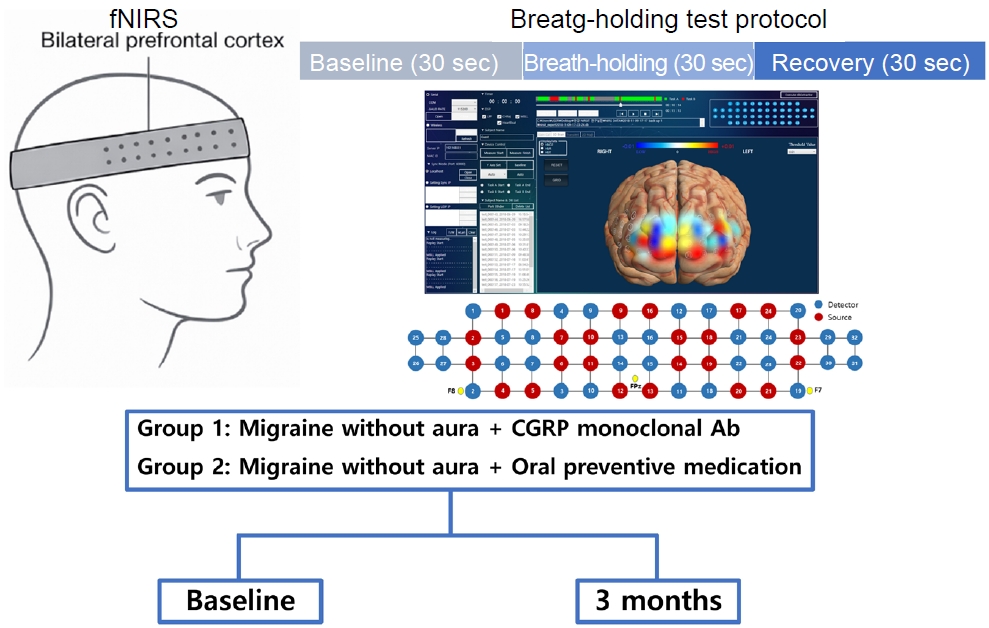
Cerebrovascular Hemodynamic Responses to Breath-Holding in Migraine: A Longitudinal Functional Near-Infrared Spectroscopy Study Comparing a Calcitonin Gene-Related Peptide Monoclonal Antibody and Oral Preventive Treatment |
||
| Dong A. Yea, Jong Kwan Choi, Yoo Hwan Kim | ||
| DOI: http://doi.org/10.62087/hpr.2025.0029 | ||
|
||
|
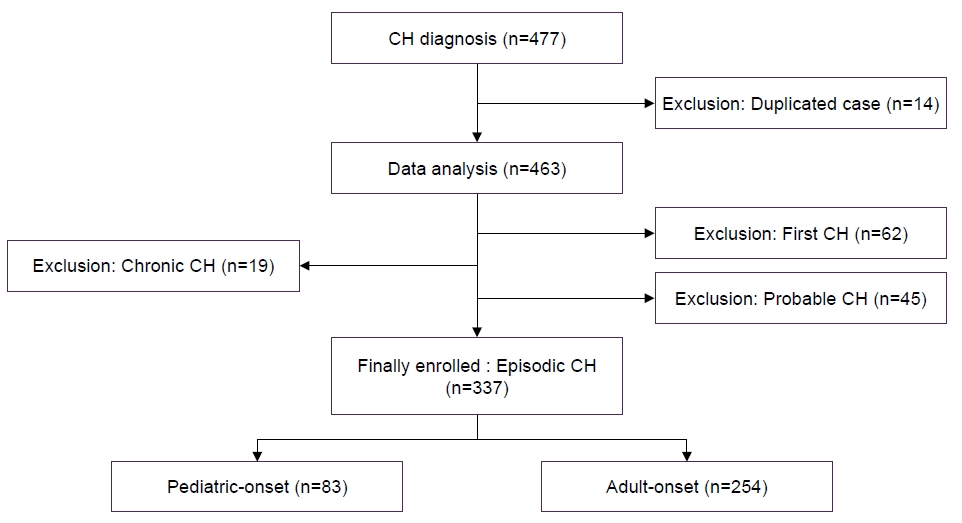
Pediatric Headache: Children and Adolescents Adult-Onset versus Pediatric-Onset Episodic Cluster Headaches: Results from the Korean Cluster Headache Registry |
||
| Pil-Wook Chung, Byung-Su Kim, Jeong-Wook Park, Jong-Hee Sohn, Mi Ji Lee, Byung-Kun Kim, Min Kyung Chu, Tae-Jin Song, Soo-Kyoung Kim, Heui-Soo Moon, Kyungmi Oh, Soo-Jin Cho | ||
| DOI: http://doi.org/10.62087/hpr.2025.0021 | ||
|
||
| Letter to the Editor | ||
|
The honored list of reviewer in 2025 |
||
| DOI: http://doi.org/10.62087/hpr.2026.0001 | ||
 Full text
 PubReader
 ePub
ePub PDF
PDF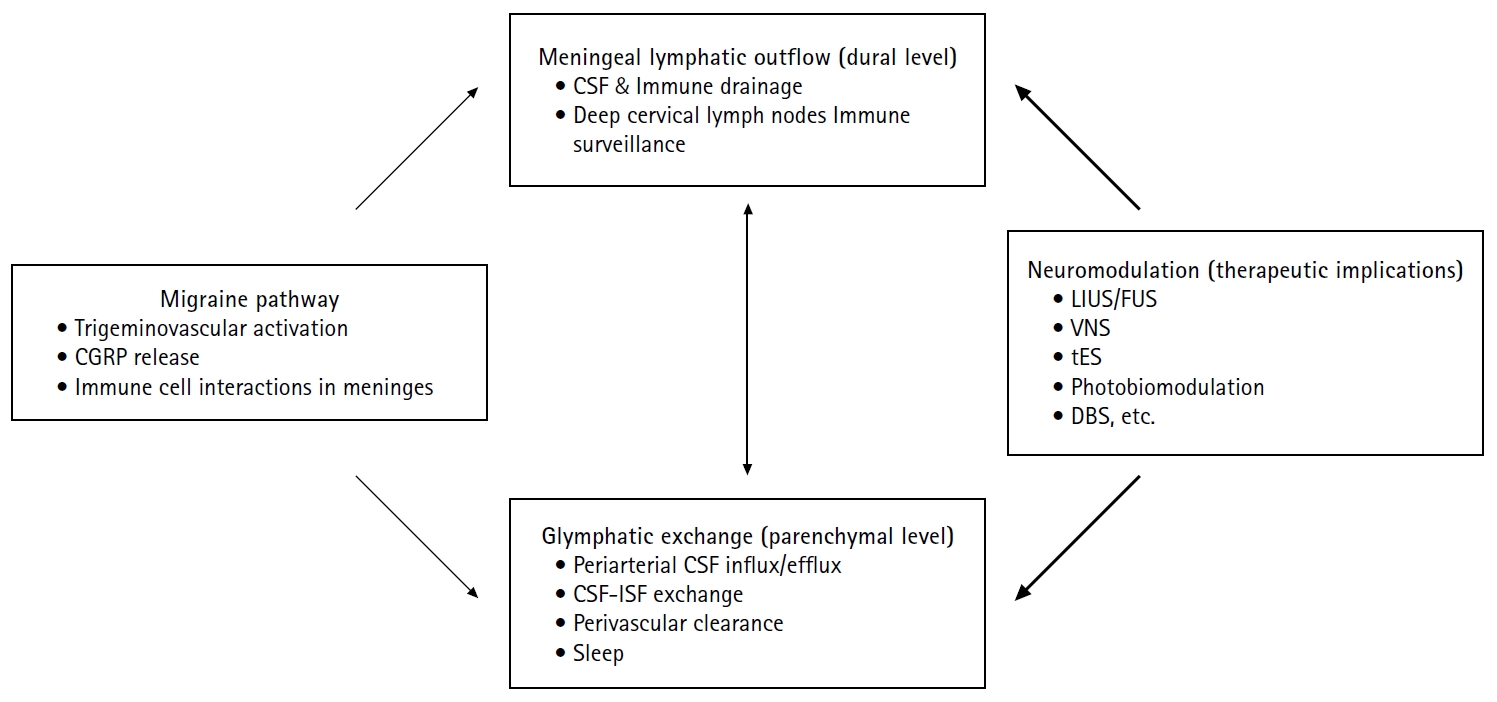
 Supplementary Material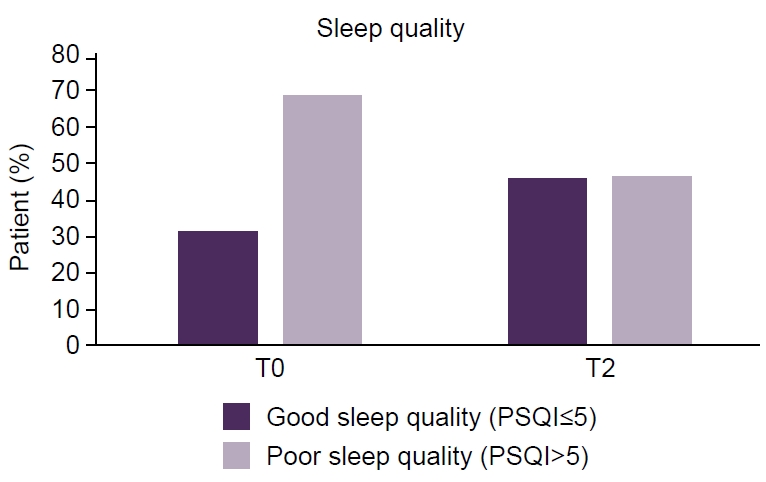
Headache and Pain Research (Headache Pain Res; pISSN: 3022-9057, eISSN: 3022-4764) publishes original articles, review articles, case report, letter to the editor, editorial, and perspective on all aspects of Headache and Pain Research. The main topics include migraine, cluster headache, tension-type headache, intracranial hypotension, intracranial hypertension, reversible cerebral vasoconstriction syndrome, other primary or secondary headache disorders, and issues related headache and pain such as dizziness, psychological, and cognitive problems. Headache and Pain Research is the official journal of Korean Headache Society, and aims to grow into an international journal and welcomes outstanding editorial board members and submissions from all over the world.
It is an Open Access journal, which permits unrestricted non-commercial use, distribution, and reproduction in any medium, provided the original work is properly cited. There is no article processing charge. Headache and Pain Research is published 3 times (the last day of February, June, and October) a year.
|
||