Skip Navigation
Skip to contents

Headache and Pain Research : Headache and Pain Research

OPEN ACCESS
SEARCH
Search

Articles

Page Path
HOME > Headache Pain Res > Volume 27(1); 2026 > Article
Review Article
Alcohol-Induced Headache: A Narrative Review Based on Migraine Pathophysiology
Woo-Seok Haorcid
Headache and Pain Research 2026;27(1):21-29.
DOI: https://doi.org/10.62087/hpr.2025.0027
Published online: February 23, 2026

Department of Neurology, Severance Hospital, Yonsei University College of Medicine, Seoul, Republic of Korea

Correspondence: Woo-Seok Ha, M.D. Department of Neurology, Severance Hospital, Yonsei University College of Medicine, 50-1 Yonsei-ro, Seodaemun-gu, Seoul 03722, Republic of Korea Tel: +82-2-2228-1600, Fax: +82-2-393-0705, E-mail: haha88@yuhs.ac
• Received: December 18, 2025   • Revised: January 27, 2026   • Accepted: January 28, 2026

© 2026 The Korean Headache Society

This is an Open Access article distributed under the terms of the Creative Commons Attribution Non-Commercial License (https://creativecommons.org/licenses/by-nc/4.0) which permits unrestricted non-commercial use, distribution, and reproduction in any medium, provided the original work is properly cited.

  • 80 Views
  • 3 Download
prev next
  • Alcohol-induced headache (AIH) is one of the most common headache experiences and is associated with a substantial socioeconomic burden; however, its pathophysiological mechanisms and clinical classification remain inadequately defined. Accumulating evidence indicates that AIH shares key biological pathways with migraine, particularly involving activation of the trigeminovascular system and calcitonin gene-related peptide (CGRP) signaling. Although currently available hangover remedies are supported by limited high-quality evidence, anti-CGRP treatments have emerged as a biologically plausible option for the situational prevention and acute treatment of AIH. A phenotype-based approach is therefore essential for achieving accurate diagnosis and effective management of alcohol-related headaches. Future well-designed clinical trials focusing on CGRP antagonists are warranted to address this common yet neglected disorder.
Alcohol-induced headache (AIH) is one of the most common headache experiences in the general population, with a lifetime prevalence of approximately 72%.1 In a recent cross-sectional study of 347 Dutch adults, 8.1% of workers reported at least one episode of absenteeism per year due to alcohol hangover, and the estimated national annual cost exceeded €2.6 billion.2 Despite this substantial individual and societal burden, scientific interest in alcohol hangover and AIH has remained surprisingly limited.3 This neglect likely stems from a blend of cultural attitudes about drinking for leisure and the seemingly straightforward assumption that hangovers can be prevented by simply reducing alcohol consumption.
AIH has accompanied human history for as long as alcohol itself. Archaeological evidence from Israel has identified beer residues dating back approximately 13,000 years.4 In ancient Persian medical texts describing headache disorders over 9,000 years ago, AIH was reported as one of the most frequently mentioned headache phenotypes, ranking third overall.5 Yet, despite this long history, systematic attempts to classify AIH are relatively recent. The International Classification of Headache Disorders (ICHD) introduced the distinction between immediate and delayed AIH in ICHD-2, a framework that has been retained in ICHD-3.6,7 However, this classification has been occasionally questioned.8,9 As acknowledged within the ICHD itself, alcohol is one of the most common triggers of migraine.10,11 This creates an inherent diagnostic ambiguity. For example, if a patient with episodic migraine develops a bilateral pulsatile headache the day after drinking red wine, should this be classified as alcohol-triggered migraine or as delayed AIH? Furthermore, considering that alcohol consumption increases the production of nitric oxide (NO),12 it may also be classified as “Delayed NO donor-induced headache”. Although one of the core ICHD principles is that a diagnosis should be “not better accounted for by another disorder,” this criterion becomes difficult to apply when headache phenotypes overlap substantially.
In clinical practice, such headaches are often managed as an extension of migraine, for example with triptan treatment. This pragmatic approach is not without rationale. Accumulating evidence suggests that many forms of AIH share key pathophysiological mechanisms with migraine, including trigeminovascular activation, calcitonin gene-related peptide (CGRP) signaling, and neuroinflammatory processes.13 It should be emphasized, however, that alcohol avoidance or reduction remains the primary clinical recommendation for alcohol-related headache, and that pharmacological approaches discussed in this review are secondary and exploratory in nature.
In this narrative review we aim to interpret AIH through the framework of migraine pathophysiology. Due to the narrative nature of the review, formal systematic review reporting systems (e.g., PRISMA) could not be applied. Relevant literature was identified through targeted database searches and manual reference screening, based on the expertise of the authors. We discuss the mechanistic overlap between AIH and migraine, propose a phenotype-based approach to classification, and review current evidence on treatment and prevention, highlighting critical gaps for future research.
1. Immediate alcohol-induced headache (International Classification of Headache Disorders, 3rd edition code 8.1.4.1)
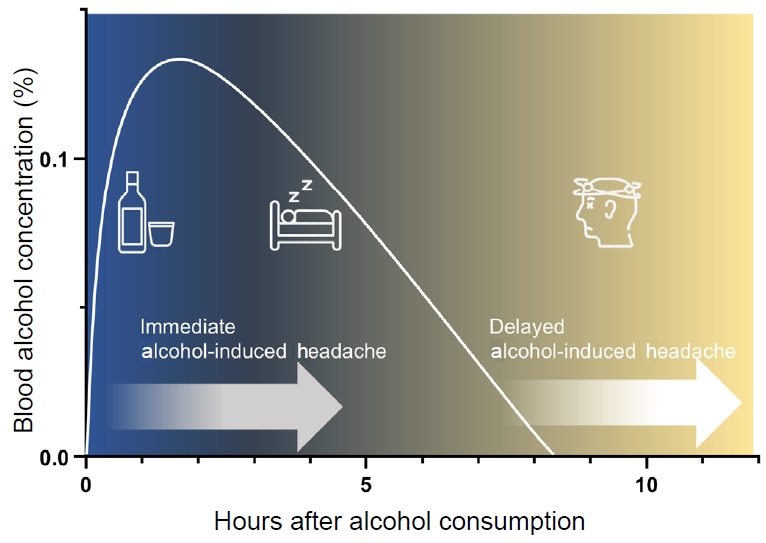
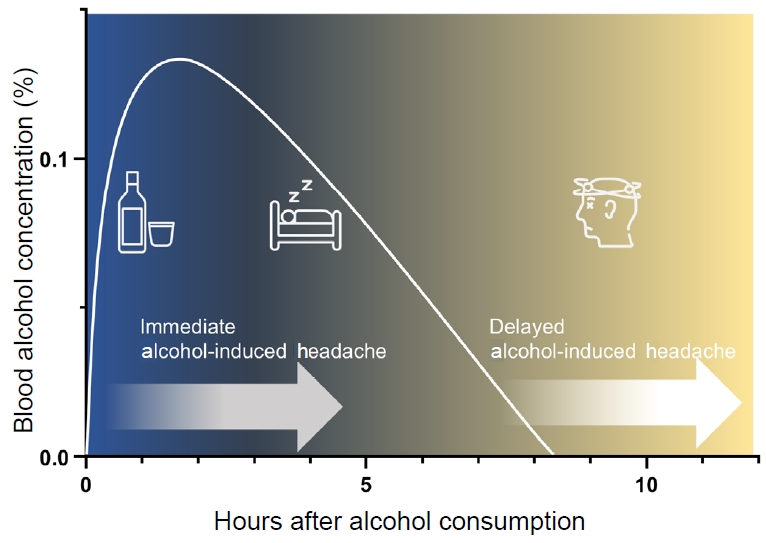
Immediate AIH, also referred to as “cocktail headache,” is defined by the ICHD-3 diagnostic criteria shown in Table 1.7 This headache can occur rapidly, within 3 hours, even after small amounts of alcohol (e.g., one or two glasses of wine). The pain is typically bilateral and pulsating and is aggravated by physical activity. Affected individuals often prefer to lie down, a behavior that may reflect difficulty maintaining cerebral perfusion pressure secondary to alcohol-induced cerebral vasodilation.14
2. Delayed alcohol-induced headache (International Classification of Headache Disorders, 3rd edition code 8.1.4.2)
Delayed AIH, commonly referred to as “alcohol hangover headache,” develops 5–12 hours after heavy alcohol consumption and is defined by the ICHD-3 criteria summarized in Table 2.7 Duration and severity of headache may correlate with the amount of alcohol intake.15 Patients with delayed AIH also frequently report orthostatic headaches. In contrast to immediate AIH, delayed AIH occurs as part of a broader hangover syndrome and is accompanied by a cluster of autonomic, gastrointestinal, sleep-related, and cognitive symptoms.16 A characteristic feature of delayed AIH typically emerges when blood alcohol concentration (BAC) is declining or has returned to near zero (Figure 1).17 Experimental studies suggest that a peak BAC of at least 0.1% is generally required for a clinically relevant hangover to occur.18 According to Widmark’s equation,19 this corresponds approximately to the BAC reached 90 minutes after a 60-kg adult consumes one bottle of soju.
The time-based distinction between immediate and delayed AIH in ICHD-3 is primarily operational and reflects consistent clinical observations rather than established mechanistic thresholds. To date, no definitive physiological evidence has validated a specific biological boundary underlying the 3-hour versus 5–12-hour cut-offs, and this classification should be interpreted as a pragmatic framework for clinical and research purposes.
3. Distinguishing alcohol-triggered migraine from alcohol-induced headache
According to a cohort study in Korea, alcohol consumption was associated with an odds ratio (OR) of 2.5 for attack occurrence in episodic migraine.20 However, as discussed above, the current ICHD-3 framework does not clearly distinguish alcohol-triggered migraine from AIH in individuals with migraine. When patients present with recurrent headaches following alcohol consumption, we suggest that diagnosis should simultaneously consider temporal profile, headache phenotype, and individual susceptibility (Table 3). The most critical factor is whether the patient’s habitual migraine phenotype is faithfully reproduced after alcohol intake. This includes classical migraine features such as unilateral pain, nausea or vomiting, photophobia, and phonophobia. If these features are present, the headache should be classified as alcohol-triggered migraine. Conversely, when headache is accompanied by symptoms commonly associated with hangover, such as thirst, impaired concentration, apathy, diarrhea, anorexia, and autonomic symptoms, it should be classified as delayed AIH. However, despite this approach, many patients may exhibit overlapping or inconsistent clinical phenotypes. In such cases, we recommend assigning alcohol-triggered migraine as the primary diagnosis for clinical practicality, while interpreting non-headache symptoms and residual complaints as part of the hangover spectrum.
Evidence that alcohol precipitates headache can be found in numerous epidemiological studies. Paradoxically, many population-based studies consistently show that individuals with primary headache disorders consume less alcohol than those without headache. In a Norwegian study including 51,000 participants, headache prevalence increased 10%–20% in non-drinkers compared to moderate drinkers, across all age groups.21 Similarly, a Danish cross-sectional study of 46,000 individuals reported that weekly alcohol consumption was associated with a lower odds of migraine compared with abstinence (OR=0.55).22 This inverse association was replicated in analyses of the U.S. National Health and Nutrition Examination Survey (OR=0.54).23 These findings do not suggest that alcohol protects against headache. Rather, they indicate that headache sufferers are more likely to avoid alcohol.
When stratified by headache subtype, the association between migraine and alcohol becomes more pronounced. A recent meta-analysis demonstrated that alcohol consumption was not significantly associated with the risk of tension-type headache, whereas drinkers had a 1.5-fold lower likelihood of migraine compared with nondrinkers.24 Among patients with migraine, approximately 34%–35% report alcohol as a triggering factor.25,26 Interestingly, however, only a minority of migraine patients who abstain from or avoid alcohol, ranging from 3% to 25%, explicitly report headache as the primary reason for avoidance.26,27 This observation suggests that alcohol avoidance in migraineurs may occur both consciously and unconsciously, possibly reflecting learned or conditioned behavioral adaptation. Although alcohol avoidance can also be influenced by external and social factors such as religion, gender, and social norms, the consistent inverse association observed across diverse populations supports a prominent role of behavioral adaptation related to headache susceptibility.
Genetic susceptibility seems to play a critical role in AIH and hangover. A study analyzing 2,248 participants of twins found that over 40% of alcohol-related hangovers are determined by genetic factors.28 Inactive variants of aldehyde dehydrogenase 2 (ALDH2) are strongly associated with alcohol flushing, severe hangover symptoms, and headache.29,30 In a large Japanese cross-sectional study, ALDH2 deficiency demonstrated high sensitivity and specificity for alcohol flushing and hangover. Women and individuals exhibiting flushing reactions were significantly more likely to experience hangover headache. Notably, among individuals with migraine, those carrying inactive ALDH2 variants reported lower alcohol consumption and more pronounced adverse effects after drinking, supporting the presence of a gene–environment interaction in alcohol-related headache susceptibility.
Evidence regarding the role of specific alcoholic beverage types in triggering AIH remains limited. Fermented beverages generally contain higher levels of congeners produced during the fermentation process, which contribute to flavor and aroma but have also been implicated as potential contributors to hangover severity.9 Accordingly, some studies have suggested that red wine may provoke headache more frequently than white wine,31 whereas others have reported opposite or inconsistent findings.25
Importantly, no studies have systematically compared the severity of AIH across different beverage types under standardized BAC conditions. Moreover, most animal models of AIH rely on the administration of pure ethanol rather than alcohol beverages.14,32,33 Given the substantial heterogeneity in beverage preferences, drinking patterns and cultural contexts across populations and nations, the present review focuses primarily on the effects of alcohol itself rather than beverage-specific factors.
1. Central mechanisms: trigeminovascular activation and calcitonin gene-related peptide signaling
AIH was historically attributed primarily to peripheral vasodilation.34 However, accumulating evidence now indicates that activation of the trigeminovascular system and enhanced CGRP signaling represent central mechanisms directly linked to migraine pathophysiology.13,35,36 Migraine pain originates from activation of trigeminal afferents innervating the meninges and perivascular structures.37,38 Following alcohol consumption, ethanol is metabolized to acetaldehyde, which directly stimulates this system and activates trigeminal afferents.
Experimental animal models have demonstrated that gastrointestinal administration of alcohol activates members of the transient receptor potential (TRP) ion channel family, including transient receptor potential cation channel subfamily V member 1 (TRPV1) and Transient receptor potential cation channel, subfamily A, member 1 (TRPA1), leading to increased CGRP release.14,32 CGRP released from trigeminal nerve terminals acts on neurons and satellite glial cells within the trigeminal ganglion, promoting peripheral sensitization, while simultaneously activating second-order nociceptive neurons in the brainstem to induce central sensitization.37 These mechanisms provide a biological explanation for why AIH frequently manifests not only as pain but also with migraine-like extracranial features such as cutaneous allodynia and photophobia.32,39 Notably, these alcohol-induced effects are attenuated by CGRP antagonists, such as olcegepant, or by silencing receptor activity–modifying protein 1, a key component of the CGRP receptor complex, in animal model.32 Together, these findings suggest that anti-CGRP therapies may be effective in suppressing the clinical expression of AIH.
2. Peripheral mechanisms: nitric oxide signaling, vascular reactivity, and inflammation
Both animal and human studies consistently demonstrate that alcohol induces complex and bidirectional changes in NO signaling.12,39,40 Acute or low-dose alcohol exposure activates endothelial NO synthase, resulting in increased NO production and vasodilation. NO promotes cerebral blood flow while activating cyclic guanosine monophosphate signaling pathways that facilitate CGRP release from trigeminal nerve terminals.37 In contrast, chronic exposure to high-dose alcohol leads to depletion of NO bioavailability and antioxidant defenses through oxidative stress.12,33 Although this mechanism contributes to hypertension in chronic alcoholism, it may also offer insight into the paradoxically lower headache frequency reported in long-term heavy drinkers. Importantly, the delayed nature of NO-induced headache provides a plausible explanation for why delayed AIH is not strictly dose dependent and why headache frequently emerges during the declining phase of BAC.41
In parallel, alcohol consumption elicits systemic and central inflammatory responses. Elevated levels of cytokines, including interleukin-10, interleukin-12, and interferon-γ, as well as increased prostaglandin production, have been consistently observed during alcohol hangover.16,42 These inflammatory mediators are related to headache, nausea, and malaise and overlap substantially with pathways implicated in migraine-related neuroinflammation.43
3. Metabolic and behavioral modifiers
The metabolic consequences of alcohol consumption are broad and help explain why certain individuals are particularly prone to migraine. Alcohol increases the production of reactive oxygen species and reactive nitrogen species, inducing oxidative stress within the trigeminovascular system.44,45 This mechanism is well recognized in alcohol-related cardiovascular disease and may also be relevant to migraine biology. In migraine, thiobarbituric acid–reactive substances have been proposed as potential biomarkers, and preliminary studies suggesting therapeutic effects of antioxidants support a shared oxidative stress pathway linking AIH and migraine.44,46 Alcohol also inhibits diamine oxidase, the primary enzyme responsible for histamine degradation, thereby increasing endogenous histamine levels.47 Elevated histamine exerts vasodilatory effects and represents another potential mechanism contributing to migraine susceptibility following alcohol intake.43
Furthermore, alcohol disrupts sleep architecture and increases sleep fragmentation, while also elevating next-day anxiety levels.48,49 These behavioral and neuropsychological effects may lower the migraine threshold and place susceptible individuals in a state that favors headache generation.
1. Current evidence
To date, no clinical trial has specifically evaluated AIH as a primary outcome. Instead, most interventional studies have focused on the prevention or treatment of alcohol hangover as a broader syndrome.50 Based on randomized controlled trials, the following agents have demonstrated some efficacy in reducing hangover symptoms: clovinol,51 tolfenamic acid,52 pyritinol,53 Hovenia dulcis extract,54 L-cysteine combined with vitamins B and C,55 red ginseng,56 Korean pear juice,57 and HK-GCM-H01.58 Notably, four of these eight agents were evaluated in studies conducted in Korea. These compounds have been proposed to act through anti-inflammatory or prostaglandin-related pathways, or through antioxidant and metabolic mechanisms.50 In contrast, medications commonly considered anti-migraine agents, such as naproxen or propranolol,59,60 have not demonstrated benefit.
However, important limitations prevent us from extrapolating these findings directly to AIH. A 2022 systematic review of seven of the eight agents listed above found that all randomized trials were rated as having “very low quality” according to the GRADE (Grading of Recommendations Assessment, Development and Evaluation) methodology.50 This was largely due to small sample sizes and substantial selection bias.
A more fundamental limitation lies in the heterogeneity of hangover definitions and outcome measures. Most studies assessed hangover severity using composite scores derived from multiple symptoms, such as fatigue, thirst, sweating, and headache. These scales were often investigator-developed, insufficiently validated, and remain controversial in the literature.61 No single agent improved all symptom domains. Headache severity was usually evaluated using binary outcomes or simple numeric rating scales. These methodological issues substantially limit the applicability of existing hangover trials to AIH.
2. Interface with migraine treatment and the potential role of calcitonin gene-related peptide-pathway–based therapies
In clinical practice, when alcohol-triggered migraine is suspected, standard acute migraine treatments, such as triptans, are frequently used and appear effective. Most established acute migraine therapies can be considered in this setting, and there is currently no evidence suggesting clinically relevant drug–alcohol interactions for triptans.
In patients who experience migraine attacks with high probability following alcohol consumption, a strategy of mini-prophylaxis may be considered. For example, administration of a long-acting triptan, such as frovatriptan, at bedtime after alcohol intake may be conceptually analogous to mini-prophylaxis used for menstrual migraine.62 More recently, Lipton and colleagues63 introduced the concept of “situational prevention,” in which imegepant is used for prophylactic purpose during periods with increased risk of migraine attacks. AIH is a prototypical example of such a high-risk situation, in which pharmacological prevention may be considered in the setting of anticipated alcohol exposure, such as wine consumption during travel.
Although current evidence remains limited, CGRP-targeted therapies represent the most biologically plausible candidate for AIH prevention from a migraine-based perspective.13 Rimegepant, a CGRP receptor antagonist with both acute and preventive indications, is particularly attractive, as it may theoretically provide benefit in alcohol-triggered migraine as well as in immediate and delayed AIH.64 Nevertheless, important safety considerations remain. While imegepant has demonstrated minimal hepatotoxicity with short-term use,65 its safety profile when administered in the context of recent alcohol consumption, including repeated or situational use, remains insufficiently studied.
3. Key considerations for future clinical trials of calcitonin gene-related peptide antagonists in alcohol-induced headache
Several methodological issues must be addressed in future trials evaluating CGRP antagonists for the prevention or treatment of AIH. First, reproducibility of AIH must be ensured. AIH exhibits marked interindividual variability, and even within the same individual, identical alcohol exposure may or may not result in headache. A randomized, crossover trial design would therefore be optimal to control for this variability. Second, phenotypes of AIH should be clearly distinguished rather than pooled. For example, trials should separately evaluate migraineurs with reproducible alcohol-triggered migraine and non-migraineurs with reproducible delayed AIH. Third, alcohol exposure must be standardized. Target exposure should be defined by BAC rather than by beverage volume alone, for example aiming for a peak BAC of ≥0.1%. Verification can be achieved using breath analyzers or blood sampling. Fourth, confounding hangover-related factors, including sleep quality, mood, gastrointestinal symptoms, and hydration status, should also be measured and controlled. Finally, ethical considerations exist. Investigators must carefully assess whether study designs inadvertently encourage alcohol consumption and must adhere strictly to institutional review board standards regarding participant safety.
AIH is more than a simple consequence of alcohol consumption; it is a complex neurological phenomenon that closely intersects with migraine biology. By understanding AIH, clinicians can move beyond reactive hangover management toward a more proactive, mechanism-based therapeutic approach. The integration of situational prevention strategies and the potential application of CGRP antagonists offer promising avenues for patients suffering from recurrent AIH. Continued research with standardized methodologies will be crucial to bridge the gap between bench evidence and clinical practice.
Figure 1.
Schematic illustration of the temporal characteristics of alcohol-induced headache based on blood alcohol concentration.
hpr-2025-0027f1.jpg
Table 1.
ICHD-3 criteria for immediate alcohol-induced headache (8.1.4.1)
A. Any headache fulfilling criterion C
B. Alcohol has been ingested
C. Evidence of causation demonstrated by all of the following:
 1. headache has developed within 3 hours of alcohol ingestion
 2. headache has resolved within 72 hours after alcohol ingestion has ceased
 3. headache has at least one of the following three characteristics:
  a) bilateral
  b) pulsating quality
  c) aggravated by physical activity
D. Not better accounted for by another ICHD-3 diagnosis.

ICHD, International Classification of Headache Disorders.

Table 2.
ICHD-3 criteria for delayed alcohol-induced headache (8.1.4.2)
A. Any headache fulfilling criterion C
B. Alcohol has been ingested
C. Evidence of causation demonstrated by all of the following:
 1. headache has developed within 5–12 hours after ingestion of alcohol
 2. headache has resolved within 72 hours of onset
 3. headache has at least one of the following three characteristics:
  a) bilateral
  b) pulsating quality
  c) aggravated by physical activity
D. Not better accounted for by another ICHD-3 diagnosis.

ICHD, International Classification of Headache Disorders.

Table 3.
Clinical characteristics of alcohol-related headaches
Domain Alcohol-triggered migraine Delayed alcohol-induced headache
Onset Variable; often within hours Within 5–12 hours of consumption
Duration 4–72 hours Mostly <10 hours
Location Unilateral Bilateral, frontal dominant
Quality Pulsating Pressing>pulsating
Aggravation by activity ++ ++
Nausea/vomiting ++ ++
Photophobia/phonophobia ++ +
Fatigue, dizziness, tremor ± ++
Cranial autonomic symptoms (lacrimation, conjunctival injection, etc.) - +
Systemic autonomic symptoms (sweating, palpitation, etc.) - +

Although both entities are classified as distinct entities within the International Classification of Headache Disorders, 3rd edition framework, this table is intended as a pragmatic tool for clinical differentiation rather than a nosological proposal.

  • 1. Rasmussen BK, Olesen J. Symptomatic and nonsymptomatic headaches in a general population. Neurology 1992;42:1225-1231.ArticlePubMed
  • 2. Severeijns NR, Sips ASM, Merlo A, Bruce G, Verster JC. Absenteeism, presenteeism, and the economic costs of alcohol hangover in the Netherlands. Healthcare (Basel) 2024;12:335.ArticlePubMedPMC
  • 3. Verster JC, Penning R. Treatment and prevention of alcohol hangover. Curr Drug Abuse Rev 2010;3:103-109.ArticlePubMed
  • 4. Liu L, Wang J, Rosenberg D, Zhao H, Lengyel G, Nadel D. Fermented beverage and food storage in 13,000 y-old stone mortars at Raqefet Cave, Israel: investigating Natufian ritual feasting. J Archaeol Sci Rep 2018;21:783-793.Article
  • 5. Zarshenas MM, Petramfar P, Firoozabadi A, Moein MR, Mohagheghzadeh A. Types of headache and those remedies in traditional persian medicine. Pharmacogn Rev 2013;7:17-26.ArticlePubMedPMC
  • 6. Headache Classification Subcommittee of the International Headache Society. The International Classification of Headache Disorders: 2nd edition. Cephalalgia 2004;24 Suppl 1:9-160.ArticlePubMed
  • 7. Headache Classification Committee of the International Headache Society (IHS). The International Classification of Headache Disorders, 3rd edition. Cephalalgia 2018;38:1-211.ArticlePubMedPMCPDF
  • 8. Dueland AN. Headache and alcohol. Headache 2015;55:1045-1049.ArticlePubMed
  • 9. Evans RW, Sun C, Lay C. Alcohol hangover headache. Headache 2007;47:277-279.ArticlePubMed
  • 10. Hindiyeh NA, Zhang N, Farrar M, Banerjee P, Lombard L, Aurora SK. The role of diet and nutrition in migraine triggers and treatment: a systematic literature review. Headache 2020;60:1300-1316.ArticlePubMedPMCPDF
  • 11. Kim BK, Bae HJ, Koo JS, Kwon OH, Park JM. Clinical characteristics of migraine and tension-type headache: the experience in Eulji Hospital. Korean J Headache 2005;6:103.
  • 12. Syapin PJ. Alcohol and nitric oxide production by cells of the brain. Alcohol 1998;16:159-165.ArticlePubMed
  • 13. Hakim SM. The potential role of calcitonin gene-related peptide antagonists for the management of hangover headaches. Curr Opin Anaesthesiol 2025;38:669-673.Article
  • 14. Nicoletti P, Trevisani M, Manconi M, et al. Ethanol causes neurogenic vasodilation by TRPV1 activation and CGRP release in the trigeminovascular system of the guinea pig. Cephalalgia 2008;28:9-17.ArticlePDF
  • 15. García-Azorín D, Aparicio-Cordero L, Talavera B, Johnson A, Schytz HW, Guerrero-Peral ÁL. Clinical characterization of delayed alcohol-induced headache: a study of 1,108 participants. Neurology 2020;95:e2161-e2169.ArticlePubMed
  • 16. Penning R, van Nuland M, Fliervoet LA, Olivier B, Verster JC. The pathology of alcohol hangover. Curr Drug Abuse Rev 2010;3:68-75.ArticlePubMed
  • 17. Ylikahri RH, Leino T, Huttunen MO, Pösö AR, Eriksson CJP, Nikkilä EA. Effects of fructose and glucose on ethanol-induced metabolic changes and on the intensity of alcohol intoxication and hangover. Eur J Clin Invest 1976;6:93-102.ArticlePubMed
  • 18. Penning R, de Haan L, Verster JC. Caffeinated drinks, alcohol consumption, and hangover severity. Open Neuropsychopharmacol J 2011;4:36-39.Article
  • 19. Gullberg RG. Estimating the uncertainty associated with Widmark’s equation as commonly applied in forensic toxicology. Forensic Sci Int 2007;172:33-39.ArticlePubMed
  • 20. Park JW, Chu MK, Kim JM, Park SG, Cho SJ. Analysis of trigger factors in episodic migraineurs using a smartphone headache diary applications. PLoS One 2016;11:e0149577.ArticlePubMedPMC
  • 21. Aamodt AH, Stovner LJ, Hagen K, Bråthen G, Zwart J. Headache prevalence related to smoking and alcohol use. The Head-HUNT Study. Eur J Neurol 2006;13:1233-1238.ArticlePubMed
  • 22. Le H, Tfelt-Hansen P, Skytthe A, Kyvik KO, Olesen J. Association between migraine, lifestyle and socioeconomic factors: a population-based cross-sectional study. J Headache Pain 2011;12:157-172.ArticlePubMedPMCPDF
  • 23. Tang Y, Zhang K, Zhang Y, et al. Association between dietary alcohol intake and migraine or severe headache miscellaneous pain: the NHANES 1999-2004. Brain Behav 2025;15:e70400.ArticlePubMedPMC
  • 24. Błaszczyk B, Straburzyński M, Więckiewicz M, et al. Relationship between alcohol and primary headaches: a systematic review and meta-analysis. J Headache Pain 2023;24:116.ArticlePubMedPMC
  • 25. Panconesi A. Alcohol and migraine: trigger factor, consumption, mechanisms. A review. J Headache Pain 2008;9:19-27.ArticlePubMedPMCPDF
  • 26. Onderwater GLJ, van Oosterhout WPJ, Schoonman GG, Ferrari MD, Terwindt GM. Alcoholic beverages as trigger factor and the effect on alcohol consumption behavior in patients with migraine. Eur J Neurol 2019;26:588-595.ArticlePubMedPDF
  • 27. Panconesi A, Franchini M, Bartolozzi ML, Mugnai S, Guidi L. Alcoholic drinks as triggers in primary headaches. Pain Med 2013;14:1254-1259.ArticlePubMed
  • 28. Slutske WS, Piasecki TM, Nathanson L, Statham DJ, Martin NG. Genetic influences on alcohol-related hangover. Addiction 2014;109:2027-2034.ArticlePubMedPMC
  • 29. Yokoyama M, Suzuki N, Yokoyama T, et al. Interactions between migraine and tension-type headache and alcohol drinking, alcohol flushing, and hangover in Japanese. J Headache Pain 2012;13:137-145.ArticlePubMedPMCPDF
  • 30. Wall TL, Shea SH, Luczak SE, Cook TA, Carr LG. Genetic associations of alcohol dehydrogenase with alcohol use disorders and endophenotypes in white college students. J Abnorm Psychol 2005;114:456-465.ArticlePubMed
  • 31. Krymchantowski AV, da Cunha Jevoux C. Wine and headache. Headache 2014;54:967-975.ArticlePubMed
  • 32. Landini L, Souza Monteiro de Araujo D, Chieca M, et al. Acetaldehyde via CGRP receptor and TRPA1 in Schwann cells mediates ethanol-evoked periorbital mechanical allodynia in mice: relevance for migraine. J Biomed Sci 2023;30:28.ArticlePubMedPMCPDF
  • 33. Husain K, Mejia J, Lalla J, Kazim S. Dose response of alcohol-induced changes in BP, nitric oxide and antioxidants in rat plasma. Pharmacol Res 2005;51:337-343.ArticlePubMed
  • 34. Mathew RJ, Wilson WH. Regional cerebral blood flow changes associated with ethanol intoxication. Stroke 1986;17:1156-1159.ArticlePubMed
  • 35. Panconesi A. Alcohol-induced headaches: evidence for a central mechanism? J Neurosci Rural Pract 2016;7:269-275.ArticlePubMedPMC
  • 36. Paolucci M, Altamura C, Vernieri F. The role of endothelial dysfunction in the pathophysiology and cerebrovascular effects of migraine: a narrative review. J Clin Neurol 2021;17:164-175.ArticlePubMedPMCPDF
  • 37. Iyengar S, Johnson KW, Ossipov MH, Aurora SK. CGRP and the trigeminal system in migraine. Headache 2019;59:659-681.ArticlePubMedPMCPDF
  • 38. Moon HS, Chung PW, Kim BK. New targeted drugs for acute treatment of migraine. Korean J Headache 2023;24:56-65.
  • 39. Lu S, Zhang Y, Yang Y, et al. Hangover headache and its behavioral changes in rats. Iran J Basic Med Sci 2023;26:326-334.ArticlePubMedPMC
  • 40. Cheng Y, Liu X, Ma X, Garcia R, Belfield K, Haorah J. Alcohol promotes waste clearance in the CNS via brain vascular reactivity. Free Radic Biol Med 2019;143:115-126.ArticlePubMed
  • 41. Olesen J. Provocation of attacks to discover migraine signaling mechanisms and new drug targets: early history and future perspectives - a narrative review. J Headache Pain 2024;25:105.ArticlePubMedPMCPDF
  • 42. Kim DJ, Kim W, Yoon SJ, et al. Effects of alcohol hangover on cytokine production in healthy subjects. Alcohol 2003;31:167-170.ArticlePubMed
  • 43. Ha WS, Chu MK. Altered immunity in migraine: a comprehensive scoping review. J Headache Pain 2024;25:95.ArticlePubMedPMCPDF
  • 44. Gao XM, Dong WH, Xia CL, et al. Centranthera grandiflore alleviates alcohol-induced oxidative stress and cell apoptosis. Chin J Nat Med 2022;20:572-579.ArticlePubMed
  • 45. Wu D, Zhai Q, Shi X. Alcohol-induced oxidative stress and cell responses. J Gastroenterol Hepatol 2006;21 Suppl 3:S26-S29.ArticlePubMed
  • 46. Jiménez-Jiménez FJ, Alonso-Navarro H, García-Martín E, Espada-Rubio S, Agúndez JAG. Oxidative stress and migraine. Mol Neurobiol 2024;61:8344-8360.ArticlePubMedPDF
  • 47. Panula P. Histamine, histamine H3 receptor, and alcohol use disorder. Br J Pharmacol 2020;177:634-641.ArticlePubMedPMCPDF
  • 48. Rossetti I, Zambusi L, Maccioni P, et al. Predisposition to alcohol drinking and alcohol consumption alter expression of calcitonin gene-related peptide, neuropeptide Y, and microglia in bed nucleus of stria terminalis in a subnucleus-specific manner. Front Cell Neurosci 2019;13:158.ArticlePubMedPMC
  • 49. Gardiner C, Weakley J, Burke LM, et al. The effect of alcohol on subsequent sleep in healthy adults: a systematic review and meta-analysis. Sleep Med Rev 2025;80:102030.ArticlePubMed
  • 50. Roberts E, Smith R, Hotopf M, Drummond C. The efficacy and tolerability of pharmacologically active interventions for alcohol-induced hangover symptomatology: a systematic review of the evidence from randomised placebo-controlled trials. Addiction 2022;117:2157-2167.ArticlePubMedPDF
  • 51. Mammen RR, Natinga Mulakal J, Mohanan R, Maliakel B, Illathu Madhavamenon K. Clove bud polyphenols alleviate alterations in inflammation and oxidative stress markers associated with binge drinking: a randomized double-blinded placebo-controlled crossover study. J Med Food 2018;21:1188-1196.ArticlePubMed
  • 52. Kaivola S, Parantainen J, Osterman T, Timonen H. Hangover headache and prostaglandins: prophylactic treatment with tolfenamic acid. Cephalalgia 1983;3:31-36.ArticlePubMedPDF
  • 53. Khan MA, Jensen K, Krogh HJ. Alcohol-induced hangover. A double-blind comparison of pyritinol and placebo in preventing hangover symptoms. Q J Stud Alcohol 1973;34:1195-1201.ArticlePubMed
  • 54. Kim H, Kim YJ, Jeong HY, et al. A standardized extract of the fruit of Hovenia dulcis alleviated alcohol-induced hangover in healthy subjects with heterozygous ALDH2: a randomized, controlled, crossover trial. J Ethnopharmacol 2017;209:167-174.ArticlePubMed
  • 55. Eriksson CJP, Metsälä M, Möykkynen T, et al. L-cysteine containing vitamin supplement which prevents or alleviates alcohol-related hangover symptoms: nausea, headache, stress and anxiety. Alcohol Alcohol 2020;55:660-666.ArticlePubMedPDF
  • 56. Lee MH, Kwak JH, Jeon G, et al. Red ginseng relieves the effects of alcohol consumption and hangover symptoms in healthy men: a randomized crossover study. Food Funct 2014;5:528-534.ArticlePubMed
  • 57. Lee HS, Isse T, Kawamoto T, Baik HW, Park JY, Yang M. Effect of Korean pear (Pyruspyrifolia cv. Shingo) juice on hangover severity following alcohol consumption. Food Chem Toxicol 2013;58:101-106.ArticlePubMed
  • 58. Jang YL, Park MK. Advanced clinical symptoms of the antihangover compound HK-GCM-H01 in healthy Koreans. Transl Clin Pharmacol 2024;32:137-149.ArticlePubMedPMCPDF
  • 59. Verster JC, Dahl TA, Scholey A, Iversen JM. The effects of SJP-001 on alcohol hangover severity: a pilot study. J Clin Med 2020;9:932.ArticlePubMedPMC
  • 60. Bogin RM, Nostrant TT, Young MJ. Propranolol for the treatment of the alcoholic hangover. Am J Drug Alcohol Abuse 1987;13:175-180.ArticlePubMed
  • 61. Verster JC, van de Loo AJAE, Benson S, Scholey A, Stock AK. The assessment of overall hangover severity. J Clin Med 2020;9:786.ArticlePubMedPMC
  • 62. Zhang H, Qi JZ, Zhang ZH. Comparative efficacy of different treatments for menstrual migraine: a systematic review and network meta-analysis. J Headache Pain 2023;24:81.ArticlePubMedPMCPDF
  • 63. Lipton RB, Ailani J, Mullin K, et al. Situational prevention: pharmacotherapy during periods of increased risk for migraine attacks. Headache 2024;64:859-864.ArticlePubMed
  • 64. Kim BS, Chung PW, Chung JM, et al. Evidence-based recommendations on pharmacologic treatment for migraine prevention: a clinical practice guideline from the Korean Headache Society. Headache Pain Res 2025;26:5-20.ArticlePDF
  • 65. Bertz R, Bhardwaj R, Morris BA, Ashbrenner E, Coric V, Croop R. A placebo-controlled, randomized, single and multiple dose study to evaluate the safety, tolerability, and pharmacokinetics of rimegepant in healthy participants. Cephalalgia 2023;43:3331024231179131.ArticlePubMedPDF

Figure & Data

References

    Citations

    Citations to this article as recorded by  

      • PubReader PubReader
      • ePub LinkePub Link
      • Cite this Article
        Cite this Article
        export Copy Download
        Close
        Download Citation
        Download a citation file in RIS format that can be imported by all major citation management software, including EndNote, ProCite, RefWorks, and Reference Manager.

        Format:
        • RIS — For EndNote, ProCite, RefWorks, and most other reference management software
        • BibTeX — For JabRef, BibDesk, and other BibTeX-specific software
        Include:
        • Citation for the content below
        Alcohol-Induced Headache: A Narrative Review Based on Migraine Pathophysiology
        Headache Pain Res. 2026;27(1):21-29.   Published online February 23, 2026
        Close
      • XML DownloadXML Download
      Figure
      • 0
      Related articles
      Alcohol-Induced Headache: A Narrative Review Based on Migraine Pathophysiology
      Image
      Figure 1. Schematic illustration of the temporal characteristics of alcohol-induced headache based on blood alcohol concentration.
      Alcohol-Induced Headache: A Narrative Review Based on Migraine Pathophysiology
      A. Any headache fulfilling criterion C
      B. Alcohol has been ingested
      C. Evidence of causation demonstrated by all of the following:
       1. headache has developed within 3 hours of alcohol ingestion
       2. headache has resolved within 72 hours after alcohol ingestion has ceased
       3. headache has at least one of the following three characteristics:
        a) bilateral
        b) pulsating quality
        c) aggravated by physical activity
      D. Not better accounted for by another ICHD-3 diagnosis.
      A. Any headache fulfilling criterion C
      B. Alcohol has been ingested
      C. Evidence of causation demonstrated by all of the following:
       1. headache has developed within 5–12 hours after ingestion of alcohol
       2. headache has resolved within 72 hours of onset
       3. headache has at least one of the following three characteristics:
        a) bilateral
        b) pulsating quality
        c) aggravated by physical activity
      D. Not better accounted for by another ICHD-3 diagnosis.
      Domain Alcohol-triggered migraine Delayed alcohol-induced headache
      Onset Variable; often within hours Within 5–12 hours of consumption
      Duration 4–72 hours Mostly <10 hours
      Location Unilateral Bilateral, frontal dominant
      Quality Pulsating Pressing>pulsating
      Aggravation by activity ++ ++
      Nausea/vomiting ++ ++
      Photophobia/phonophobia ++ +
      Fatigue, dizziness, tremor ± ++
      Cranial autonomic symptoms (lacrimation, conjunctival injection, etc.) - +
      Systemic autonomic symptoms (sweating, palpitation, etc.) - +
      Table 1. ICHD-3 criteria for immediate alcohol-induced headache (8.1.4.1)

      ICHD, International Classification of Headache Disorders.

      Table 2. ICHD-3 criteria for delayed alcohol-induced headache (8.1.4.2)

      ICHD, International Classification of Headache Disorders.

      Table 3. Clinical characteristics of alcohol-related headaches

      Although both entities are classified as distinct entities within the International Classification of Headache Disorders, 3rd edition framework, this table is intended as a pragmatic tool for clinical differentiation rather than a nosological proposal.


      Headache and Pain Research : Headache and Pain Research
      TOP